Ensino híbrido na educação de surdos durante a pandemia: desafios da formação
DOI:
https://doi.org/10.25053/redufor.v7.e8312Palavras-chave:
Educação de Surdos, Educação Inclusiva, Tecnologias, Formação educacionalResumo
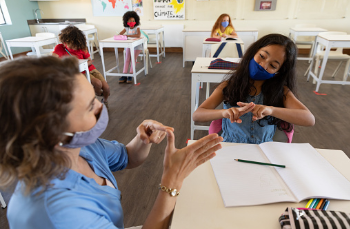
O ano de 2020 foi muito importante para (re)pensar a educação no Brasil, por ser aquele em que a comunidade educacional precisou se ressignificar perante os novos desafios impostos pela pandemia da Covid-19, necessitando de formações para a capacitação dos docentes na chamada “nova” modalidade de ensino. Nesse sentido, este trabalho
tem por objetivo fazer um recorte sobre o que aconteceu e vem acontecendo no meio acadêmico após ser decretada a pandemia. A pesquisa em comento investiga, sob o viés da análise qualitativa, utilizando-se de questionários, as principais dificuldades encontradas pelos docentes de salas inclusivas do ensino médio e profissionais de salas
de recursos multifuncionais, no processo da aprendizagem de estudantes surdos, com o uso das tecnologias, e a real necessidade de formação desses docentes frente ao ensino híbrido. Tem como bases teóricas norteando este constructo textual: Giroto (2012), Moran (2015), Moreira (2020) e Quadros (2003). Os resultados apontam esforços no contexto do ensino de estudantes surdos, visto que as mudanças de paradigmas educacionais ressignificaram e estão ressignificando os agentes, os modos/meios, os instrumentos e as finalidades educacionais, além de apontarem necessidades de inovações das práticas educativas.
Downloads
Referências
ALVES, J. F.; GOMES, J. S. Educação de pessoas surdas em tempos de pandemia: linguagem e relações de poder. Revista Artes de Educar, Rio de Janeiro, v. 6, p. 325-338, 2020. Disponível em: https://www.epublicacoes.uerj.br/index.php/riae/article/view/51903/35507. Acesso em: 4 mar. 2022.
GIL, C. A. Métodos e técnicas em pesquisa social. São Paulo: Atlas, 2008.
GIROTO, C. R. M.; POKER, R. B.; OMOTE, S. Educação Especial, formação de professores e o uso das tecnologias de informação e comunicação: a construção de práticas pedagógicas inclusivas. In: GIROTO, C. R. M.; POKER, R. B.; OMOTE, S. (org.). As tecnologias nas práticas pedagógicas inclusivas. Marília: Oficina Universitária; São Paulo: Cultura Acadêmica, 2012. p. 10-24.
JARDILINO, J. R. L. et al. Condições educacionais e a exclusão digital na pandemia - 2020-2021: o caso da educação pública na Região dos Inconfidentes, MG. ETD: Educação Temática Digital, Campinas, v. 24, n. 1, p. 91-112, 2022. DOI:
https://doi.org/10.20396/etd.v24i1.8665898. Disponível em: https://periodicos.sbu.unicamp.br/ojs/index.php/etd/article/view/8665898. Acesso em: 4 mar. 2022.
MORAN, J. Educação híbrida: um conceito-chave para a educação, hoje. In: BACICH, L.; TANZI NETO, A.; TREVISANI, F. M. (org.). Ensino híbrido: personalização e tecnologia na educação. Porto Alegre: Penso, 2015. p. 27-45.
MOREIRA, J. A. Reconfigurando ecossistemas digitais de aprendizagens com tecnologias audiovisuais. EmRede: Revista de Educação a Distância, Porto Alegre, v. 5, n. 1, p. 5-15, 2018.
MOREIRA, J. A.; HORTA, M. J. Educação e ambientes híbridos de aprendizagem: um processo de inovação sustentada. Revista UFG, Goiânia, v. 20, p. 1-29, 2020.
PLETSCH, M. D.; PITANGA DE OLIVEIRA, M. C.; COLACIQUE, R. C. Apresentação - inclusão digital e acessibilidade: desafios da educação contemporânea. Revista Docência e Cibercultura, Rio de Janeiro, v. 4, n. 1, p. 13-23, 2020. Disponível em: https://www.epublicacoes.uerj.br/index.php/redoc/article/view/50573/33305. Acesso em: 4 mar. 2021.
QUADROS, R. M. Situando as diferenças implicadas na educação de surdos: inclusão/exclusão. Revista Ponto de Vista, Viçosa-MG, v. 5, n. 5, p. 81-111, 2003.
SCHLEMMER, E.; DI FELICE, M.; SERRA, I. M. R. S. Educação OnLIFE: a dimensão ecológica das arquiteturas digitais de aprendizagem. Educar em Revista, Curitiba, v. 36, e76120, 2020. Disponível em: https://www.scielo.br/j/er/a/5kXJycPzpBZn6L8cXHRMRVy/?lang=pt. Acesso em: 2 mar. 2022.
SENA, L. S.; SERRA, I. M. R. S. Plataformas digitais e o protagonismo estudantil no contexto do ensino remoto emergencial. Revista TICs e EaD em Foco, São Luís, v. 7, n. 2, p. 46-59, 2021. DOI: https://doi.org/10.18817/ticsead.v7i2.561. Disponível em: https://www.uemanet.uema.br/revista/index.php/ticseadfoco/article/view/561. Acesso em: 2 abr. 2022.
SENA, L. S.; SERRA, I. M. R. S.; LIMA, M. R. S. Ensino remoto emergencial e a mediação de intérpretes de Libras no município de Timon – Maranhão. Revista Roteiro, Joaçaba, v. 47, p. 1-20, 2022. DOI: https://doi.org/10.18593/r.v47.27745. Disponível em: https://portalperiodicos.unoesc.edu.br/roteiro/article/view/27745#:~:text=A%20proposta%
da%20presente%20pesquisa,sob%20a%20perspectiva%20da%20inclus%C3%A3o. Acesso em: 2 abr. 2022.
SILVA, M. Sala de aula interativa: a educação presencial e à distância em sintonia com a era digital e com a cidadania. In: INTERCOM, 24., 2001, Campo Grande. Anais [...]. Campo Grande: Intercom, 2001. p. 1-20.
VYGOTSKY, L. S. A construção do pensamento e da linguagem. São Paulo: Martins Fontes, 2000.
VYGOTSKY, L. S. A formação social da mente. São Paulo: Martins Fontes, 1991.
VYGOTSKY, L. S. Pensamento e linguagem. Edição eletrônica: Ridendo Castigat Mores, 2001.
ZAGO, N. A entrevista e seu processo de construção: reflexões com base na experiência prática de pesquisa. In: ZAGO, N.; CARVALHO, M. P.; VILELA, R. A. T. (org.). Itinerários de pesquisa. Rio de Janeiro: DP&A, 2003. p. 287-309.
Downloads
Publicado
Edição
Seção
Licença
Copyright (c) 2022 Andrea Pestana Pinheiro, Lílian de Sousa Sena, Ilka Serra

Este trabalho está licenciado sob uma licença Creative Commons Attribution 4.0 International License.
Os autores possuem direitos autorais dos seus textos:
A revista Educação & Formação permite ao autor os direitos de publicação, no entanto, recomenda um intervalo de dois anos para o caso de republicação.
Os nomes e endereços informados nesta revista serão usados exclusivamente para os serviços prestados por esta publicação, não sendo disponibilizados para outras finalidades ou a terceiros.
Como Citar




 Português (Brasil)
 English
 Español (España)
 Français (France)