
Ethical and social challenges of artificial intelligence in education
DOI:
https://doi.org/10.46230/lef.v17i3.16067Keywords:
educational technology, artificial intelligence, humanized educationAbstract
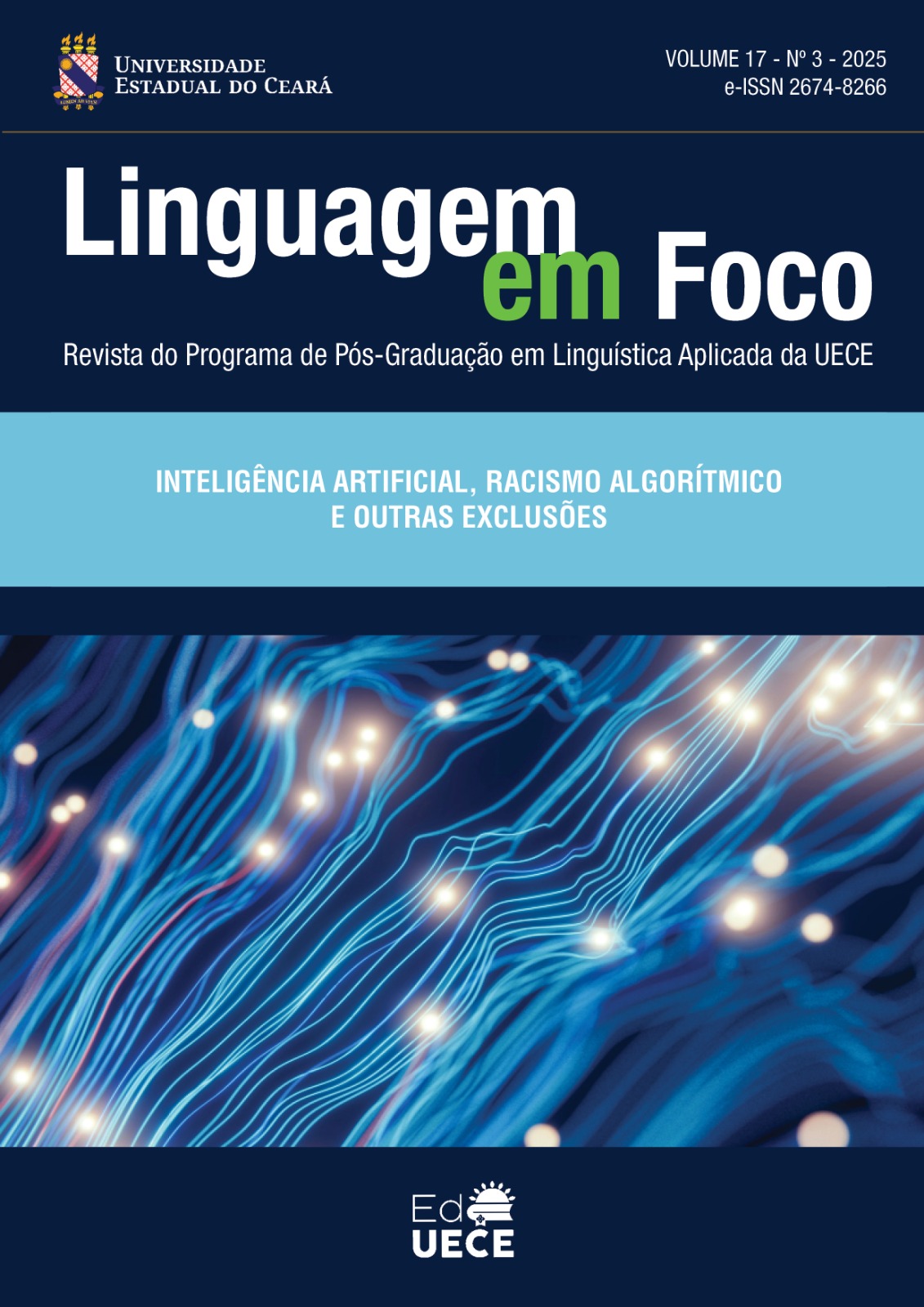
Technological innovations drive profound transformations in contemporary society, reshaping customs and behaviors in social, cultural, and educational interactions. These changes directly influence shifts and demands across different contexts, including the educational field, due to the vast array of technological tools now embedded in society. The growing use of Artificial Intelligence (AI) by modern society creates opportunities to enhance various practices but also raises concerns, as these tools must be used in a balanced, critical, and reflective manner. Excessive and unthinking reliance on AI tools can lead to technological dependence, perpetuate discrimination through algorithmic biases, and exacerbate social and educational inequalities. This article discusses the challenges of AI in education, particularly regarding unequal access, algorithmic biases, and technological dependency in society and, consequently, in education. Finally, it highlights the need for policies, investments, and educational initiatives that promote ethical, critical, and reflective AI use, aiming for a humanized application of AI in education. This ensures equitable access to innovative technological tools for all, regardless of region or social class.
Downloads

References
BRASIL. Ministério da Saúde. Portaria MS/GM nº 188, de 3 de fevereiro de 2020. Declara Emergência em Saúde Pública de importância Nacional (ESPIN) em decorrência da Infecção Humana pelo novo Coronavírus (2019-nCoV) [Internet]. Diário Oficial da União, Brasília (DF), 2020 fev 4 [citado 2020 abr 7]; Seção Extra:1. Disponível em: https://legislacao.presidencia.gov.br/atos/?tipo=PRT&numero=188&ano=2020&data=03/02/2020&ato=9ecUTW61EMZpWT815. Acesso em: 02 de jan. 2025.
BRASIL. Portaria No Portaria No 343, De 17 De Março De 2020. Diário Oficial da União, Brasília, 17 mar. 2020. Disponível em: http://www.planalto.gov.br/CCIVil_03/Portaria/PRT/Portaria%20n%C2%BA%20343-20-mec.htm. Acesso em: 02 mar. 2025.
BRASIL. Resolução CNE/CP N° 2, de 20 de dezembro de 2019. Diário Oficial da União. Disponível em:http://portal.mec.gov.br/index.php?option=com_docman&view=downl oad&alias=135951-rcp002-19&category_slug=dezembro-2019-pdf&Itemid=30192. Acesso em: 20 de jul. de 2022.
BRASIL. Resolução CNE/CEB Nº 2, de 21 de março de 2025. Diário Oficial da União. Disponível em: https://www.gov.br/mec/pt-br/cne/2025/marco/rceb002_25.pdf. Acesso em: 03 de nov. de 2025.
BUENO, J. L. P.; GOMES, M. A. O. Uma análise histórico-crítica da formação de professores com tecnologias de informação e comunicação. Revista Cocar, v. 5, n. 10, p. 53-64, 2011. Disponível em: https://periodicos.uepa.br/index.php/cocar/article/view/196/170. Acesso em: 15 de mar. 2025.
D’AMBROSIO, U. Educação matemática da teoria à prática. 18.ed. Campinas:
Papirus, 2009.
GIL, A. C. Como elaborar projetos de pesquisa. São Paulo: Atlas, 2002.
HARARI, Y. N. Nexus: uma breve história das redes de informação, da Idade da Pedra à inteligência artificial. São Paulo: Cia das Letras, 2024.
KRENAK, A. A vida não é útil. São Paulo: Companhia das Letras, 2020.
LIMA, L. de; LOUREIRO, R. C. Tecnodocência: concepções teóricas. Fortaleza: Edições UFC, 2019.
KURZWEIL, R. GOLDBERGER, A. A singularidade está próxima: quando os humanos transcendem a biologia. São Paulo: Itaú Cultural, 2019.
MARTINS, R. X. A COVID- 19 e o fim da Educação a Distância: um ensaio. Revista de
Educação a Distância, v. 7, n. 1, p. 242-256, 2020. Disponível em: DOI: https://doi.org/10.53628/emrede.v7.1.620
https://www.aunirede.org.br/revista/index.php/emrede/article/view/620. Acesso em: 25 ago.
MORAN, J. M. MASETTO, M. T. BEHRENS, M. A. Novas tecnologias e mediação pedagógica. 21 ed. Campinas: Papirus, 2013.
NICOLELIS, M. O Verdadeiro Criador de Tudo: como o cérebro humano esculpiu o universo como nós o conhecemos. Editora Crítica. 1ª ed. São Paulo. 2020.
PISCHETOLA, M. MIRANDA, L. A sala de aula como ecossistema: tecnologias, complexidade e novos olhares para a educação. Petrópolis: Editora Vozes, 2019.
VIEIRA PINTO, A. O Conceito de Tecnologia. Rio de Janeiro: Contraponto, 2005.
SILVA, E. H. da. Educação e futuro juntos: humanização para além do ser humano. Revista OWL (OWL Journal)-Revista Interdisciplinar de Ensino e Educação, v. 2, n. 4, p. 152-163, 2024. Disponível em: https://www.revistaowl.com.br/index.php/owl/article/view/256. Acesso e: 03 de nov. de 2025.
SAVIANI, D. O trabalho como princípio educativo frente às novas tecnologias. In: SAVIANI, D. Novas tecnologias, trabalho e educação: um debate multidisciplinar. Petrópolis: Editora Vozes, 1994. p. 147-164.
THADEI, J. Mediação e educação na atualidade: um diálogo com formadores de professores. In: BACICH, L.; MORAN, J. (Org.) Metodologias ativas para uma educação inovadora: uma abordagem teórico-prática. Porto Alegre: Editora Penso, 2018. p. 90-105.
Downloads
Published
How to Cite
Issue
Section
License
Copyright (c) 2025 Nayara Rocha Fernandes, Thiago Henrique Barnabé Corrêa, José Lucas Pedreira Bueno

This work is licensed under a Creative Commons Attribution 4.0 International License.

Authors who publish in Linguagem em Foco Scientific Journal agree to the following terms:
- Authors retain the copyright and grant the journal the right of first publication. The articles are simultaneously licensed under the Creative Commons Attribution License which allows sharing the work with an acknowledgement of its authorship and initial publication in this journal.
- The concepts issued in signed articles are the absolute and exclusive responsibility of their authors. Therefore, we request a Statement of Copyright, which must be submitted with the manuscript as a Supplementary Document.
- Authors are authorized to make the version of the text published in Linguagem em Foco Scientific Journal available in institutional repositories or other academic work distribution platforms (ex. ResearchGate, Academia.edu).