
O ESPERMATOZOIDE : DA ESPERMIAÇÃO ATÉ O EPIDÍDIMO E PATOLOGIAS ASSOCIADAS
 Rayane de Araújo Souza
- João Victor Santos Frota
- Isabela Reis Barroso do Nascimento
- Carlos Kalany Freitas
- Francisco Emanuel Pinheiro Cavalcante
- Ricardo Toniolli
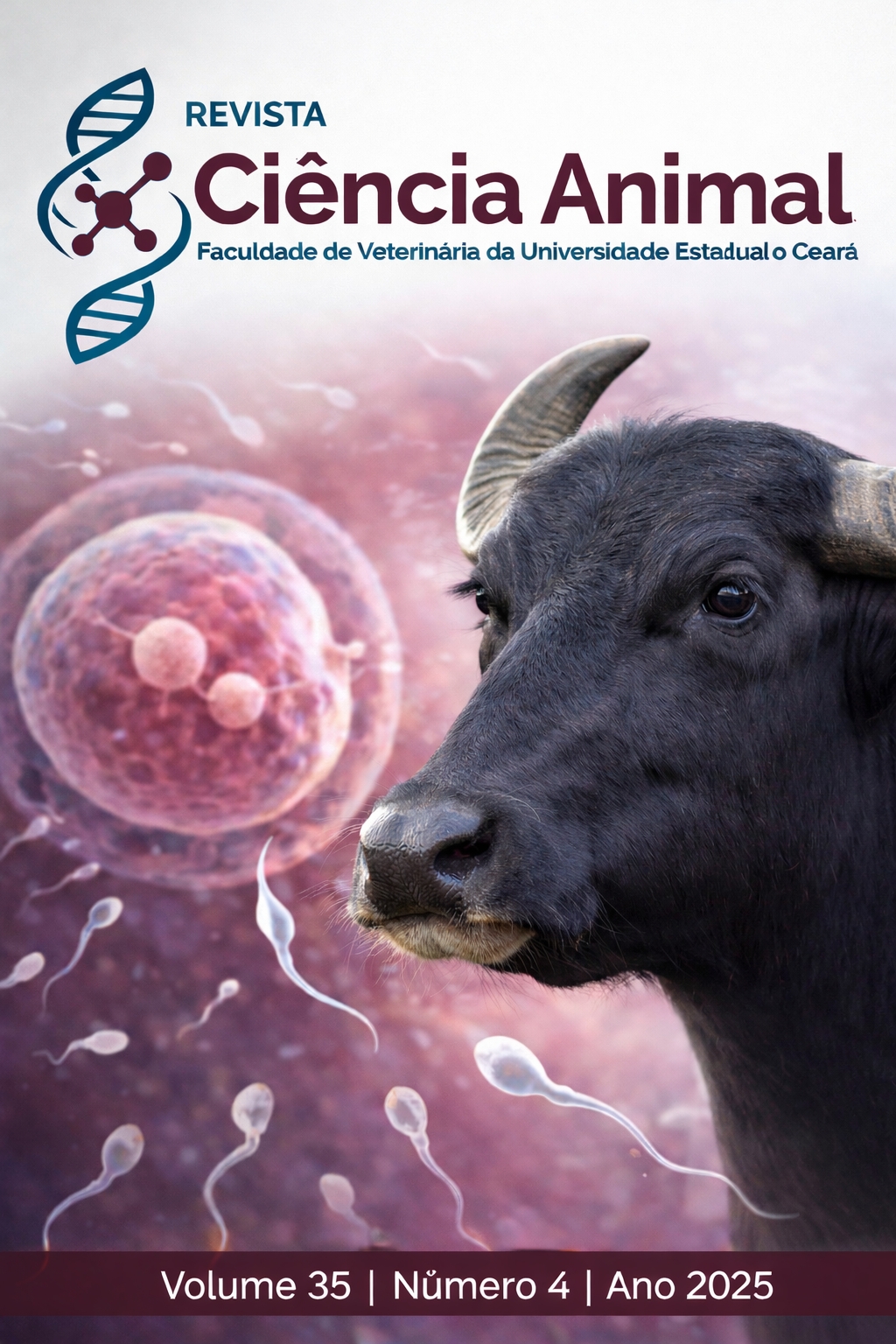
Publicado 2026-02-18
Palavras-chave
- Transporte espermático, maturação espermática, patologia reprodutiva.
Copyright (c) 2026 Rayane de Araújo Souza, João Victor Santos Frota, Isabela Reis Barroso do Nascimento, Carlos Kalany Freitas, Francisco Emanuel Pinheiro Cavalcante, Ricardo Toniolli

Este trabalho está licenciado sob uma licença Creative Commons Attribution 4.0 International License.
Como Citar
Resumo
Após a espermiação, os espermatozoides são liberados no lúmen dos túbulos seminíferos, ainda sem motilidade e capacidade de fertilização. Seguem pela rede testicular e ductos eferentesm, até alcançarem o epidídimo, impulsionados por contração rítmica influenciada por fatores neuronais e hormonais. O epidídimo geralmente é dividido em segmento inicial, cabeça, corpo e cauda, sendo constituído por diferentes tipos celulares. Nesse órgão, as células espermáticas sofrem alterações bioquímicas e fisiológicas, além de modificações pós-traducionais de proteínas, as quais conferem motilidade e poder fertilizante. Ademais, tanto o testículo, quanto os demais órgãos responsáveis pelo transporte e maturação espermática estão sujeitos à ocorrência de patologias, sejam essas de desenvolvimento, inflamatórias ou neoplásicas, as quais afetam o potencial reprodutivo do macho. Tendo em vista essa etapa da espermatogênese, este trabalho buscou descrever o percurso dos espermatozoides desde sua liberação no lúmen dos túbulos seminíferos até sua chegada à cauda do epidídimo, destacando as alterações morfológicas e funcionais que possibilitam sua capacitação para a fertilização; bem como patologias que afetam negativamente esse processo. A compreensão das modificações bioquímicas e estruturais nos espermatozoides é importante para o aprimoramento do controle reprodutivo do reprodutor e diagnóstico de disfunções reprodutivas em diferentes espécies. Os resultados reforçam a importância do controle hormonal e das condições ambientais para a qualidade espermática.
Referências
- AKINTAYO, A.; LEGARE, C.; SULLIVAN, R. Dicarbonyl L-xylulose reductase (DCXR), a "moonlighting protein" in the bovine epididymis. PLOS ONE, v.10, n.3, p.9-11, 2015.
- ALCÂNTARA, L.M.; TONIOLLI, R. A Espermatogênese. Ciência Animal, v.33, n.4, p.101-121, 2023.
- AMARAL, T.B.; SERENO, J.R.B.; PELLEGRIN, A.O. Fertilidade, funcionalidade e genética de touros zebuínos. DF: Embrapa Cerrados, 2009. 217p.
- ANGRIMANI, D.S.R.; LOSANO, J.D.A.; LUCIO C.F.; VEIGA G.A.L.; LANDIM F.C.; NICHI M.; VANNUCCHI C.I. Cytoplasmic droplet acting as a mitochondrial modulator during sperm maturation in dogs. Animal Reproduction Science, v.181, n.1, p.50–56, 2017.
- AUGER, J. Reprodução Masculina. 2. ed., Enciclopédia da Reprodução. Disponível em: https://www-sciencedirect-com.translate.goog/topics/immunology-and-microbiology/ chromatin-condensation?_x_tr_sl=en&_x_tr_tl=pt&_x_tr_hl=pt&_x_tr_pto=tc. Acesso em: 16 ago. 2025.
- BARRACHINA, F.; BATTISTONE, M.A.; CASTILLO, J.; MALLOFRÉ, C.; JODAR, M.; BRETON, S.; OLIVA, R. Sperm acquire epididymis-derived proteins through epididymosomes. Human Reproduction. v.37, n.4, p.651–668, 2022.
- BATTISTONE, M.A.; SPALLANZANI, R.G.; MENDELSOHN, A.C.; CAPEN, D.; NAIR, A.V.; BROWN, D.; BRETON, S. Novel role of proton-secreting epithelial cells in sperm maturation and mucosal immunity. Journal of Cell Science, v.133, n.5, p.64-69, 2019.
- BIASON-LAUBER, A. The Battle of the Sexes: Human Sex Development and Its Disorders. Results and Problems in Cell Differentiation, v.58, p.337-82, 2016.
- BLOM, E. The ultrastructure of some characteristic sperm defects and a proposal for a new classification of the bull spermiogram. In: Simposio Internazionale di Zootechnia, 7, 1972, Milan. Atti... Milan: [s.n.], p.125-139, 1972.
- BRETON, S.; NAIR, A.V.; BATTISTONE, M.A. Epithelial dynamics in the epididymis: role in the maturation, protection, and storage of spermatozoa. Andrology, v.7, n.5, p.631–643, 2019.
- CALDWELL, J.C.; MCGADEY, J.; KERR, R.; BENNETT, N.K.; MCDONALD, S.W. Recrutamento de células para o granuloma espermático após vasectomia em ratos. Anatomia Clínica, v.9, n.5, p.302–308, 1996.
- CARLTON, W.C.; MACGAVIN, M.D. Patologia Veterinária Especial de Thomson. 2. ed., Porto Alegre: Artmed, 1998.
- CAVALERO, T.M.S. Potenciais biomarcadores de fertilidade e produção espermática de garanhões tratados com análogo de gnrh (lecirelina), 2023. 80p. (Tese de Doutorado em Medicina Veterinária). Faculdade de Medicina Veterinária e Zootecnia, Universidade Estadual Paulista. Botucatu, 2023.
- CHEN, H; ALVES, M.B.R; BELLEANNÉE, C. Contribution of epididymal epithelial cell functions to sperm epigenetic changes and the health of progeny. Human Reproduction, v.28, p.51-66, 2022.
- CHENOWETH, P.J. Reproductive selection of males: current and future perspectives. Revista Brasileira de Reprodução Animal, Belo Horizonte, v.35, n.2, p.133-138, 2011.
- COLVILLE, T. O Sistema Reprodutivo. In: COLVILLE, T.P. Anatomia e Fisiologia Clínica para Medicina Veterinária. 2. ed., Rio de Janeiro: Elsevier, 2010. p.812-834.
- CUNHA, A.T.M. Caracterização morfológica de espermatozoides do epidídimo e estabelecimento de protocolo para seu uso na produção in vitro de embriões bovinos, 2019. 114p. (Tese de Doutorado em Biologia Animal). Programa de pós graduação em Biologia Animal, Universidade de Brasília, 2019.
- DACHEUX, J.L.; GATTI, J.L.; DACHEUX, F. Contribution of epididymal secretory proteins for spermatozoa maturation. Microscopy Research and Technique, v.61, n.1, p.7-17, 2003.
- DACHEUX, J.L.; DACHEUX, F. New insights into epididymal function in relation to sperm maturation. Reproduction, v.147, n.2, p.27-42, 2014.
- D'AMOURS, O.; FRENETTE, G.; BORDELEAU, L. J.; ALLARD, N.; LECLERC, P.; BLONDIN, P.; SULLIVAN, R. Epididymosomes transfer epididymal sperm binding protein 1 (ELSPBP1) to dead spermatozoa during epididymal transit in bovine. Biology of Reproduction, v.87, n.4, p.94-107, 2012.
- DE KRETSER, D.M.; KERR, J.B. A citologia do testículo. In: KNOBIL, E.; NEILL, J.D. A Fisiologia da Reprodução, 1. ed., Nova Iorque: Raven Press Ltd.; 1988. p.837–932.
- DIAS, G.M.; LÓPEZ, M.L.; FERREIRA, A.T.S.; CHAPEAUROUGE, D.A.; RODRIGUES, A.; PERALES, J.; RETAMAL, C.A. Thiol-disulfide proteins of stallion epididymal spermatozoa. Animal Reproduction Science, v.145, n.1/2, p.29-39, 2014.
- DOMENICE, S.; COSTA, E.M.F.; CORRÊA, R.V.; MENDONÇA, B.B. Aspectos moleculares da determinação e diferenciação sexual. Arquivo Brasileiro Endocrinologia e Metabolismo, Unicamp, v.46, n.4, p.103-115, 2002.
- DONOFRE, A.C.; CASTRO, A.C. Determinação, desenvolvimento do sexo e o seu efeito na deposição de tecidos em bovinos. Revista Científica de Medicina Veterinária, v.13, n.25, p.1-18, 2015.
- DACHEUX, J.L.; DACHEUX, F. New insights into epididymal function in relation to sperm maturation. Reproduction, v.147, n.2, p.27-42, 2014.
- DACHEUX, J.L.; GATTI, J.L.; DACHEUX, F. Contribution of epididymal secretory proteins for spermatozoa maturation. Microscopy Research and Technique, v.61, n.1, p.7-17, 2003.
- DIAS, G.M.; LÓPEZ, M.L.; FERREIRA, A.T.S.; CHAPEAUROUGE, D.A.; RODRIGUES, A.; PERALES, J.; RETAMAL, C.A. Thiol-disulfide proteins of stallion epididymal spermatozoa. Animal Reproduction Science, v.145, n.1/2, p.29-39, 2014.
- FÉRIA, B. Epididimo, Ken Hub Plataforma, 2023. Disponível em: https://www.kenhub.com/ pt/library/anatomia/epididimo. Acesso em: 19 aog. 2025.
- FLETCHER, C.D. Tumores e condições semelhantes a tumores do trato genital masculino. Histopatologia Diagnóstica de Tumores, v.5, p.913–1090, 2021.
- FOLEY, G.L.; BASSILY, N.; HESS, R.A. Intratubular spermatic granulomas of the canine efferent ductules. Toxicologic Pathology, v.23, n.6, p.731-734, 1995.
- FOSTER, R.A. Male Genital System. In: KENNEDY, J.; PALMER, S. Pathology of Domestic Animals. 6. ed., Elsevier, cap.5, 2016. p.465-510.
- FRANCA, L.R.; OGAWA, T.; AVARBOCK, M.R.; BRINSTER, R.L.; RUSSELL, L.D. O genótipo das células germinativas controla o ciclo celular durante a espermatogênese em ratos. Biology of Reproduction, v.59, p.1371–1377, 1998.
- GARRIDO-ABAD, P.; DÍAZ-MENÉNDEZ, A.; GARCÍA-MARTÍN, L.; SENRA-BRAVO, I.; FERNÁNDEZ-ARJONA, M. Tumor-like appearance of Spermatic Granuloma. International Brazilian Journal of Urology, v.45, n.3, p.634-636, 2019.
- GERVASI, M.G.; VISCONTI, P.E. Chang's meaning of capacitation: a molecular perspective. Molecular Reproduction and Development, v.83, n.10, p.860-874, 2016.
- GERVASI, M.G.; VISCONTI, P.E. Molecular changes and signaling events occurring in spermatozoa during epididymal maturation. Andrology, v.5, n.2, p.204–218, 2017.
- HENRY, M.; ECHEVERRI, A.M.L. Maturação e capacitação espermática, reação acrossômica e fertilização. In: HENRY, M.; ECHEVERRI, A.M.L. Andrologia Básica Veterinária. 1. ed., Belo Horizonte: Editora CAED, 2013. p.80-95.
- HESS, R.A.; FRANÇA, L.R. Spermatogenesis and cycle of the seminiferous epithelium. Molecular Mechanisms in Spermatogenesis, v.636, n.1, p.1-15, 2009.
- HOLT WV. Is semen analysis useful to predict the odds that the sperm will meet the egg? Reproduction in Domestic Animals, v.44, supl.3, p.31-38, 2009.
- JAMES, E.R. The Role of epididymis and the contribution of epididymosomes to mammalian reproduction. International Journal of Molecular Sciences, v.21, n.1, p.2-17, 2020.
- JONES, R.; LOPEZ, K.H. Human Reproductive Biology. 4. ed., Academic Press; Cambridge, NY, USA, 2004.
- JONES, T.C.; HUNT, R.D.; KING, N.W. Patologia Veterinária. 6. ed., São Paulo: Manole, 2000.
- JUBB, K.V.F.; KENNEDY, P.C.; PALMER, N. Pathology of Domestic Animals. 4. ed., New York: Academic Press, V.3, 1993.
- KLEIN, B.; BHUSHAN, S.; GÜNTHER, S.; MIDDENDORFF, R.; LOVELAND, K.L.; HEDGER, M.P.; MEINHARDT, A. Differential tissue-specific damage caused by bacterial epididymo-orchitis in the mouse. Molecular Human Reproduction, v.26, n.4, p.215-227, 2020.
- LEUNG. G.P.; CHEUNG, K.H.; LEUNG, C.T.; TSANG, M.W.; WONG, P.Y. Regulation of epididymal principal cell functions by basal cells: role of transient receptor potential (Trp) proteins and cyclooxygenase-1 (COX-1). Molecular and Cellular Endocrinology, v.216, n.1/2, p.5-13, 2004.
- LOVE, C.C. Stallion semen evaluation and interpretation.Proceedings Society for Theriogenology, American College of Theriogenologists, v.57, n.1, p.93-102, 2002.
- LOVE, C.C. Sperm quality assays: How good are they? The horse perspective. Animal Reproduction Science, v.194, p.63-70, 2018.
- MACHADO, J.P.M.; SALA, P.F. Alerta sobre infertilidade com origem epididimária. In: Anais da XVII Mostra de Iniciação Científica – Congrega. URCAMP, 2021.
- MAKIVAN, Z. Studies of gonadal sex differentiation. Organogenesis, v.12, n.1, p.42-51, 2016.
- MANDON, M.; HERMO, L.; CYR, D.G. Isolated rat epididymal basal cells share common properties with adult stem cells. Biology of reproduction, v.93, n.5, p.115, 2015.
- MARTINS, M.C. Avaliação da compactação de cromatina durante a maturação epididimária do espermatozoide de touro, 2018. 48p. (Dissertação de Mestrado em Medicina Veterinária). Faculdade de Medicina Veterinária, Universidade Federal de Uberlândia, Uberlândia, 2018.
- MICHEL, V.; DUAN, Y.; STOSCHEK, E.; BHUSHAN, S.; MIDDENDORFF, R.; YOUNG, J.M.; LOVELAND, K.L; KRETSER, D.M.; HEDGER, M.P.; MEINHARDT, A. Uropathogenic Escherichia coli causes fibrotic remodelling of the epididymis. The Journal of Pathology, v.240, n.1, p.15-24, 2016.
- MOUSTACAS, V.S.; SILVA, T.M.A.; COSTA, L.F.; JÚNIOR, C.A.C.; SANTOS, R.L.; PAIXÃO, T.A. Clinical and pathological changes in rams experimentally infected with Actinobacillus seminist and Histophilus somni. The Scientific World Journal, v.2014, n.1, p.1-10, 2014.
- MUÑOZ, M.W.; COHEN D.J.; DA ROS V.G.; GONZÁLEZ S.N.; CID. A.R.; SULZYK V.; CUANISCU P.S. Physiological and pathological aspects of epididymal sperm maturation. Molecular Aspects of Medicine, v.100, n.1, p1-15, 2024.
- NASCIMENTO, E.F.; SANTOS, R.L. Patologia da Reprodução dos Animais Domésticos. 1. ed., Rio de Janeiro: Guanabara Koogan, 2011.
- NEVES H.H.R.; VARGAS G.; BRITO L.F.; SCHENKEL, F.S.; ALBUQUERQUE, L.G.; CARVALHEIRO, R, Genetic and genomic analyses of testicular hypoplasia in Nellore cattle. PLoS ONE, n.14, v.1, p.e0211159, 2019.
- NIXON, B.; DE IULIIS, G.N.; DUN, M.D.; ZHOU, W.; TRIGG, N.A.; EAMENS, A.L. Profiling of epididymal small non-protein-coding RNAs. Andrology, v.7. p.669-680, 2019.
- O'DONNELL, L.; NICHOLLS, P.K.; O'BRYAN, M.K.; MCLACHLAN, R.I.; STANTON, P.G. Espermiação. PubMed Central, v.1, n.1, p.14-35, 2011.
- O’FLAHERTY, C. Orchestrating the antioxidant defenses in the epididymis. Andrology, v.7, p.662-668, 2019.
- OHASHI, O.M.; VALE, W.G.; SOUSA, J.S.; SILVA, A.O.A. Disturbance of testicular development in buffaloes (Bubalus bubalis): hypoplasia and aplasia. Buffalo Journal, v.1, p.97-101, 1995.
- OLIVA, S.U.; RINALDO, P.A.; STUMPP, T. Biologia epididimária: maturação espermática e expressão gênica. Mundo da Saúde, v.33, n.4, p.419–425, 2009.
- OLIVEIRA, L.Z.; OLIVEIRA, C.S.; MONTEIRO, F.M.; DE LIMA, V.F.M.H.; DE LIMA, F.M.; COSTA, M.Z. Alta incidência de hipoplasia testicular em touros Brangus-Ibagé no Estado do Mato Grosso do Sul: Relato de caso. Ars Veterinária, v.27, n.1, p.051-055, 2011.
- PASK, A. O Sistema Reprodutivo. Advances in Experimental Medidine and Biology, v.886, p.1-12, 2016.
- PASQUARIELLO, R.; PENNAROSSA, G.; ARCURI, S.; FERNANDEZ-FUERTES, B.; LONERGAN, P.; TIZIANA, A.L.; BREVINI, B.; GANDOLFI, F. Sperm fertilizing ability in vitro influences bovine blastocyst miRNA content, Theriogenology, v.222, p.1–9, 2024.
- PILATZ, A.; HOSSAIN, H.; KAISER, R.; MANKERTZ, A.; SCHÜTTLER, C.G.; DOMANN, E.; SCHUPPE, H.C.; CHAKRABORTY, T.; WEIDNER, W.; WAGENLEHNER, F. Acute epididymitis revisited: Impact of molecular diagnostics on etiology and contemporary guideline recommendations. European Urology, v.68, n.3, p.428-435, 2015.
- PLEUGER, C.; SILVA, E.J.R.; PILATZ, A.; BHUSHAN, S.; MEINHARDT, A. Differential Immune Response to Infection and Acute Inflammation Along the Epididymis. Frontiers in Immunology, v.11, n.1 p.1-8, 2020.
- PRUNEDA, A.; YEUNG, C.H.; BONET, S.; PINART, E.; COOPER, T.G. Concentrations of carnitine, glutamate, myo-inositol and sorbitol in epididymal fluid and spermatozoa from boars: comparison of two different semen collection frequencies. Animal Reproduction Science, v.97, p.344-355, 2007.
- ROBAIRE, B.; HERMO, L. Efferent ducts, epididymis, and vas deferens: structure, functions, and their regulation. The Physiology of Reproduction, v.1, n.1, p.999-1080, 1988.
- ROBAIRE, B.; HINTON, B.T.; ORGEBIN-CRIST, M. The Epididymis. In: KNOBIL, E.; NEILL, S physiology of reproduction. 3. ed., San Diego, CA: Academic Press, 2006. p.1071-1148.
- ROJAS, Y.D.P. O microRNA bta-mir-425-5p adquirido pelo espermatozoide durante o processo de maturação no epidídimo, 2024. 66p. (Dissertação de Mestrado em Biologia Celular e Estrutural Aplicadas). Universidade Federal de Uberlândia, Uberlândia, 2024. https://repositorio.ufu.br/handle/123456789/43683.
- RUSSELL, L. Papel na espermiação. In: RUSSELL, L.D.; GRISWOLD, M.D. A célula de Sertoli. 1. ed., Clearwater, FL: Cache River Press, 1993. p.269–302.
- RUSSELL L, CLERMONT Y. Dispositivo de ancoragem entre células de Sertoli e espermátides tardias em túbulos seminíferos de ratos. The Anatomical Record, v.185, p.259–278, 1976.
- SANTOS, R.L. Doenças reprodutivas em bovinos. Revista Brasileira de Reprodução Animal, v.40, n.4, p.126-128, 2016.
- SANTOS, G.V.M. Papel da maturação epididimária sobre a interação da proteína do plasma seminal SVS3 com espermatozoides de camundongos: uma potencial estratégia para contracepção masculina, 2022. Disponível em: https://repositorio.unesp.br/entities/ publication/e0d0063a-9f14-4daf-9ca0-1cda372baddd. Acesso em: 16 ago. 2025.
- SANTOS, M.V. Resumo da anatomia e fisiologia do epidídimo. Estratégia Med, 2023. Disponível em: https://med.estrategia.com/portal/conteudos-gratis/resumo-da-anatomia-e-fisiologia-do-epididimo/. Acesso em: 16 ago. 2025.
- SELLEM, E.; MARTHEY, S.; RAU,A.; JOUNEAU, L.; BONNET, A.; DANVIC, C.; GUYONNET, B.; KIEFER, H.; JAMMES, H.; SCHIBLER, L. Dynamics of cattle sperm sncRNAs during maturation, from testis to ejaculated sperm. Epigenetics & Chromatin, v.14, n.24, p.1-18, 2021.
- SENGER, P.L. Pathways to pregnancy and parturition. Animal Reproduction Science, v.89, n.1/4, p.93-103, 2003.
- SCHIMMING, B.C.; PINHEIRO, P.F.F.; VICENTINI, C.A.; TIRAPELLI, L.F.; TIRAPELLI D.P.C; Morphological examination of the epididymal duct in the dog. Brazilian journal of Veterinary Research and Animal Science, v.39, n.2, p.61-65, 2002.
- SCHIMMING, B.C.; PINHEIRO, P.F.F.; VICENTINI, C.A.; DOMENICONI R.F.; Ultrastructure of the epithelium lining of cauda epididymidis in mongrel dogs. Pesquisa Veterinária Brasileira, v.32, supl. 1, p.32–36, 2012.
- SHE, Z.Y.; YANG, W.X. Molecular mechanisms involved in mammalian primary sex determination. Journal of Molecular Endocrinology, v.53, n., p.21-37, 2014.
- SHIVAJI, S.; KUMAR, V.; MITRA, K.; JHA, K.N. Mammalian sperm capacitation: role of phosphotyrosine proteins. Society in Reproduction Fertility, v.63, suppl.63, p.295-312, 2007.
- SILVA, A.E.F.; DODE, M.A.N.; UNANIAN, M.M. Capacidade reprodutiva do touro de corte: funções, anormalidades e outros fatores que a influenciam. Embrapa Gado de Corte, doc.51, Campo Grande, 1993.
- SILVA, N.; BARTON, C.R. Macrophages and dendritic cells in the post-testicular environment. Cell and Tissue Research, v.363, n.1, p.97-104, 2015.
- SIQUEIRA, J.B.; OBA, E.; BITTENCOURT, R.F.; FERREIRA, J.C.P.; PINHO, R.O.; GUIMARÃES, J.D. Aplasia segmentar bilateral do epidídimo na espécie bubalina: relato de caso. Revista Brasileira de Reprodução Animal, v.36, n.2, p.133-135, 2012.
- SKERGET, S.; ROSENOW, M.A.; PETRITIS, K.; KARR, T.L. Sperm proteome maturation in the mouse epididymis. PloS One, v.10, n.11, p.e0140650, 2015.
- SOARES, C.M.T.; NEVES, M.M. O papel da gota citoplasmática na funcionalidade de espermatozoides em mamíferos: uma revisão atualizada. Revista Brasileira de Reprodução Animal, v.44, n.3, p.83-88, 2020.
- SOUZA, A.P.B. Proteômica do epidídimo suíno: uso do modelo imunocastrado na identificação de marcadores moleculares para a qualidade seminal, 2020. 99p. (Tese de Doutorado em Biotecnologia). Universidade do Vale do Taquari, 2020.
- STAUB, C.; JOHNSON, L. Review: Spermatogenesis in the bull. Animal, v.12, supl. 1, p.27-35, 2018.
- STUMP, T.; RINALDO, T.A.; OLIVA, S.U. Biologia epididimária: maturação espermática e expressão gênica. O Mundo da Saúde, São Paulo, v.33, n.4, p.419-425, 2009.
- THOMÉ, H.E. Avaliação histopatológica e caracterização morfométrica testicular e epididimária em cães adultos sem raça definida (SRD), 2006. 157p. (Dissertação de Mestrado em Medicina Veterinária). Faculdade de Medicina Veterinária e Zootecnia, UNESP Botucatu, 2006.
- TIBURCIO, B.H.S.; PAPA, L.P. Importância do médico veterinário no diagnóstico de Criptorquidismo em equinos: Revisão de literatura. Revista Sistemática, v.14, n.2, p.232–239, 2024.
- TRIGG, N.A.; EAMENS, A.L.; NIXON, B. The contribution of epididymosomes to the sperm small RNA profile. Reproduction, v.457, p.206-223, 2019.
- TULSIANI, D.P.; SKUDLAREK, M.D.; HOLLAND, M.K.; ORGEBIN-CRIST, M. Glycosylation of rat sperm plasma membrane during epididymal maturation. Biology of Reproduction, v.48, n.2, p.417- 428, 1993.
- WIJAYARATHNA, R.; PASALIC, A.; NICOLAS, N.; BINIWALE, S.; RAVINTHIRAN, R.; GENOVESE, R.; MUIR, J.A.; LOVELAND, K.L.; MEINHARDT, A.; FIJAK, M. Region-specific immune responses to autoimmune epididymitis in the murine reproductive tract. Cell and Tissue Research, v.381, n.2, p.351-360, 2020.
- WILLIAMS, G. An abnormality of the spermatozoa of some Hereford bulls. Veterinary Record, v.77, n.41, p.1204-1206, 1965.
- WILLIAMS, H.J.; REVELL, S.G.; SCHOLES, S.F.E.; COURTENAY, A.E.; SMITH, R.F. Clinical, Ultrasonographic and pathological findings in a bull with segmental aplasia of the mesonephric duct. Reproduction in Domestic Animals, v.45, n.5, p.212-216, 2009.
- YU, J.; LI, S.; WANG, L.; DONG, Z.; SI, L.; BAO, L.; WU, L. Pathogenesis of Brucella epididymoorchitis-game of Brucella death. Critical Reviews in Microbiology, v.48, n.1, p.96-120, 2021.
- ZHOU, W.; IULIIS, G.N.; DUN, M.D.; NIXON, B. Characteristics of the Epididymal Luminal Environment Responsible for Sperm Maturation and Storage. Fronties in Endocrinology, v.9, art.59, p.2-3, 2018.